
In the gilded boardrooms of the National Football League, business is booming. As of 2025, the average net worth of an NFL owner sits at a staggering $10.6 billion. The richest among them, the Walton-Penner Group, boasts a fortune of $77.4 billion. These are men who not only entered the league with immense wealth but continue to reap massive returns, splitting billions in national media deals and sponsorships before a single ticket is sold.
Yet, down in the stands, the picture is starkly different. The average fan is being squeezed dry, the loyalty that fuels the sport converted into dollars with ruthless efficiency. We are witnessing a shift in the soul of the game, where the fan experience is no longer about community, but about how much cash can be extracted from a captive audience.
The $50,000 Permission Slip
At the heart of this financial exploitation lies the "Personal Seat License" (PSL)—perhaps the most audacious invention in the history of sports economics. A PSL is not a ticket. It is merely the right to buy a ticket. It is a fee paid for the privilege of continuing to pay.
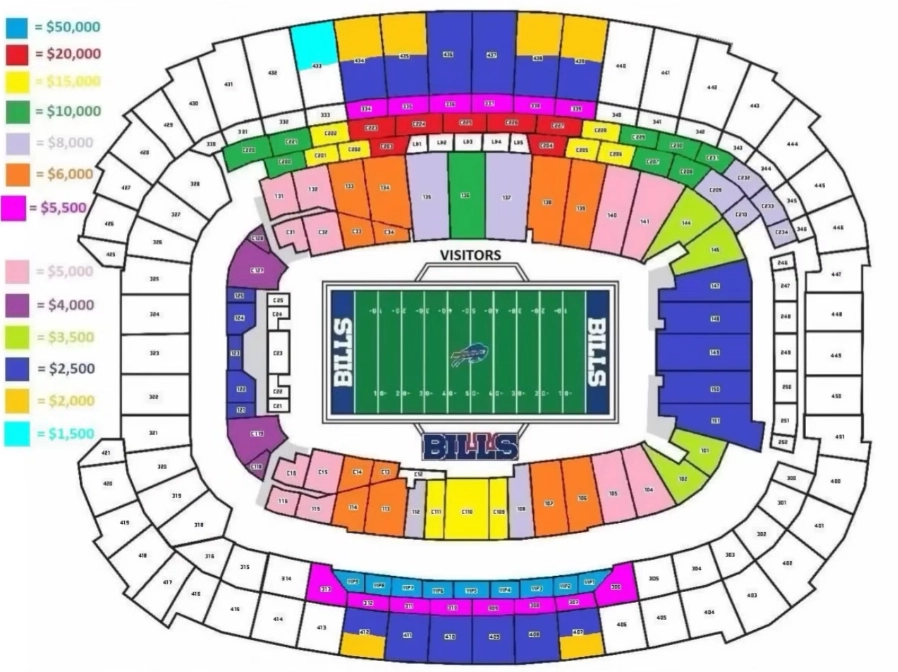
Currently, 21 of the 32 NFL franchises require some version of this license. The latest offender is the Buffalo Bills. To secure a seat in the new Highmark Stadium, fans are being asked to pay anywhere between $1,000 and $50,000. This does not include the price of the season tickets themselves, which have already seen a 12% hike.
The audacity becomes even more glaring when you look at the funding. The construction of the new Bills stadium is largely a public burden, with New York taxpayers footing a bill of $850 million—over 60% of the cost. Meanwhile, owner Terry Pegula, worth an estimated $9.3 billion, originally chipped in a fraction of the cost. To then turn around and charge lifelong fans tens of thousands of dollars just for the right to enter the building is not just a business strategy; it is a slap in the face.
A History of Extraction
The PSL was born in Charlotte with the Carolina Panthers, originally pitch as a way for fans to "invest" in building a new franchise. In that specific instance, it felt almost admissible; fans were helping build the roads and the stadium that brought a team to their city. But the concept has since mutated.
We watched it evolve with Jerry Jones and the Cowboys, where licenses climbed to $150,000. We saw it in Atlanta and San Francisco. In Los Angeles, the Rams’ SoFi Stadium took it to new heights with licenses reaching $200,000. While SoFi was privately funded—making the cost slightly more palatable—the trend is undeniable.
The Cleveland Browns are now following suit. Moving to a new dome in Brook Park, the franchise is implementing steep PSLs, with top-tier seats demanding $149,000. One fan reported their cost for six tickets skyrocketed from $24,600 to over $131,000. It is a bold move for a team that has struggled to put a winning product on the field, proving that in the modern NFL, loyalty is a one-way street.
Held Hostage by Relocation
Nothing illustrates the owner’s contempt for the fan base quite like relocation. The Chargers, Rams, and Raiders—three historic franchises—uprooted specifically for financial gain.
In San Diego, owner Dean Spanos demanded public subsidies, and when the city refused, he packed up for Los Angeles. He paid a $645 million relocation fee to do so. Stan Kroenke of the Rams paid the same fee, plus a massive settlement to St. Louis, to move his team. The Raiders left Oakland for a record-breaking $750 million in public subsidies in Las Vegas.
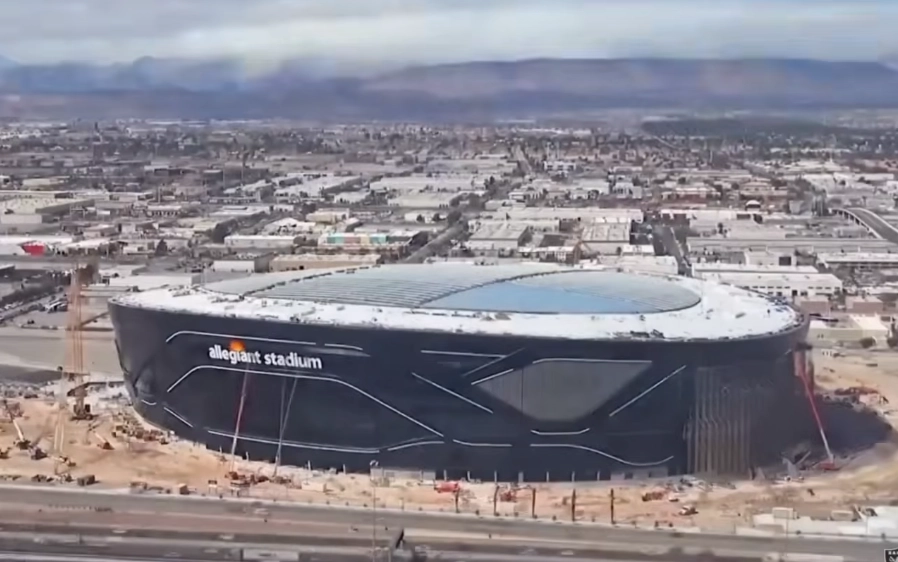
In total, these ownership groups paid over $2.2 billion in relocation fees. They had the money. They simply refused to spend it on the communities that supported them for decades. They hold cities hostage, demanding taxpayer funding under the threat of leaving, all while claiming poverty.
The Private Equity Future
If the current state of affairs seems grim, the future looks expensive. Private equity firms are now permitted to own up to 10% of NFL franchises. As the saying goes, private equity ruins everything. These are firms that prioritize profit over people in every industry they touch.
With franchises valued at over $8 billion, these investors see the NFL as a recession-resistant asset. The fear is palpable: a 10% stake today becomes 15% tomorrow. And with it comes the relentless drive for ROI—higher ticket prices, more games overseas, and aggressive price gouging.
We are already seeing the physical manifestation of this greed. New stadiums are being built with smaller capacities. Why? To prioritize premium seating. A recent rule change allows teams to keep 100% of the revenue from premium suites, whereas they must share 34% of general gate receipts. The result is a league physically designing its arenas to exclude the common fan in favor of the corporate elite.
The Last Stand
In this landscape of billionaires and bottom lines, the Green Bay Packers stand as a lonely beacon. Owned by the fans, governed by a board of directors, they are the only franchise where the community actually matters. Without this structure, they likely would have been moved years ago by a money-hungry owner.
For the rest of us, the reality is harsh. The cost for a family of four to attend an average game is nearly $780. In Detroit, that number hits an astronomical $1,900. We are being nickel-and-dimed by subscriptions, concessions, and licenses.
The owners know we won’t leave. They know our passion is resilient. But as they continue to tighten the screws, one has to wonder: how long before the common fan is priced out of the game entirely, leaving the stadiums empty cathedrals to greed?
Comments