
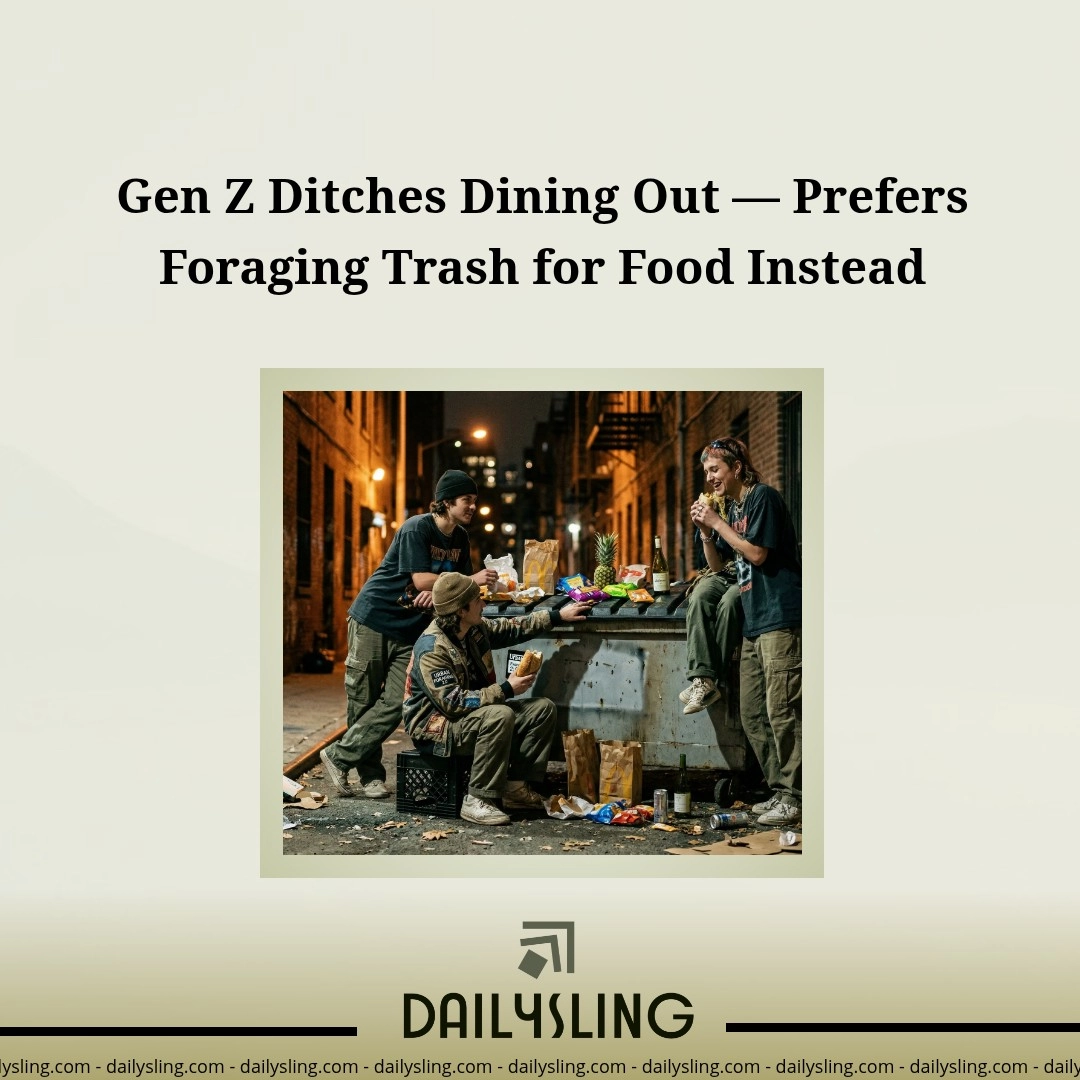
In a Shift from ‘Farm-to-Table,’ Gen Z Embraces ‘Bin-to-Belly’
By CALEB WHIMSEY
NEW YORK — For decades, the ritual of the American dinner involved a reservation, a white tablecloth, and a $24 kale salad. But for a growing cohort of Zoomers, the ultimate culinary experience isn’t found in a Michelin-starred kitchen. It’s found behind a CVS in a slightly damp cardboard box.
The trend, colloquially known as "dumpster diving" by Boomers but rebranded as "Urban Foraging 2.0" or "The Great Unboxing" on TikTok, has seen young people abandoning traditional bistros in favor of the raw, uncurated thrill of the refuse pile.
The Allure of the Alleyway
“Restaurants are just too performative,” says Silas, 22, a freelance vibe-curator who declined to give his last name for fear of being recognized by his landlord. Silas is currently elbow-deep in a trash compactor outside a high-end bakery. “There’s no authenticity in a menu. But when you find a slightly bruised avocado and a half-eaten artisanal sourdough loaf in its natural habitat? That’s a narrative.”

Sociologists suggest this shift is a direct response to the "curated" nature of modern life. In a world of filtered Instagram feeds, the gritty reality of a trash bag offers a tactile, "honest" connection to the food cycle.
“It’s about reclaiming the waste stream,” explains Dr. Aris Thistle, a cultural critic. “They aren’t just eating; they’re participating in a deconstructed supply chain.”
The ‘Fry Tax’: The Side-Hustle Solution
For those who prefer their scavenged meals with a side of logistics, the gig economy has provided a new, semi-legal loophole: The DoorDash Nibble.
While older generations view food delivery as a service, Gen Z has reimagined it as a hunting-and-gathering expedition. A growing number of young drivers admit they join delivery platforms not for the meager pay, but for the "fry tax"—the sacred right to skim three to five lukewarm fries from a McDonald's order before resealing the bag with a stapler.
“I consider myself a quality control specialist, plus I’m hungry.” says Mia, 19, who spends four hours a night driving for various apps. “If I don’t check the crispiness of at least four fries per order, I’m not doing my job. Plus, the adrenaline of not getting caught makes the potato starch hit harder.”
A Dying Industry?
The restaurant industry is, unsurprisingly, panicked. Trade groups have attempted to lure Gen Z back with "Trash-Themed Tasting Menus" served on galvanized steel lids, but the efforts have largely fallen flat.
“You can’t manufacture the musk of a real dumpster,” Silas notes, pulling a crumpled, unopened bag of artisanal chips from the heap with the triumph of a gold miner. “The irony is that we’re the first generation that actually knows where our food comes from. It comes from the bin behind the Whole Foods on 4th Street.”
As the sun sets over Brooklyn, the city’s alleys hum not with the sound of pests, but with the soft rustle of thrifted windbreakers and the glow of iPhones filming the next viral "Haul" video. The revolution will not be televised; it will be discarded, then rediscovered at 2:00 AM.

Comments