
The Start: Palo Alto, 1995
The air in the Digital Equipment Corporation (DEC) Palo Alto Lab was thick with the hum of cooling fans and the quiet desperation of engineers facing a technological wall. It was 1995, and the hardware team was preparing to unleash the Alpha 64-bit systems—machines so blindingly fast that the era’s standard benchmarks were useless [01:11]. They were trying to measure a hurricane with a wind vane.

The problem wasn't the software; it was the sheer lack of "mess." To truly stress-test these silicon beasts, they needed a workload that was unpredictable, chaotic, and massive. While on vacation, DEC researcher Paul Flaherty sketched a radical solution in his notebook: stop using synthetic tests and instead point a crawler at the burgeoning, disorganized sprawl of the World Wide Web [01:42]. He didn't set out to organize the world’s information. He just wanted to find a way to break his own machines [00:54].
A Side Project Without Permission
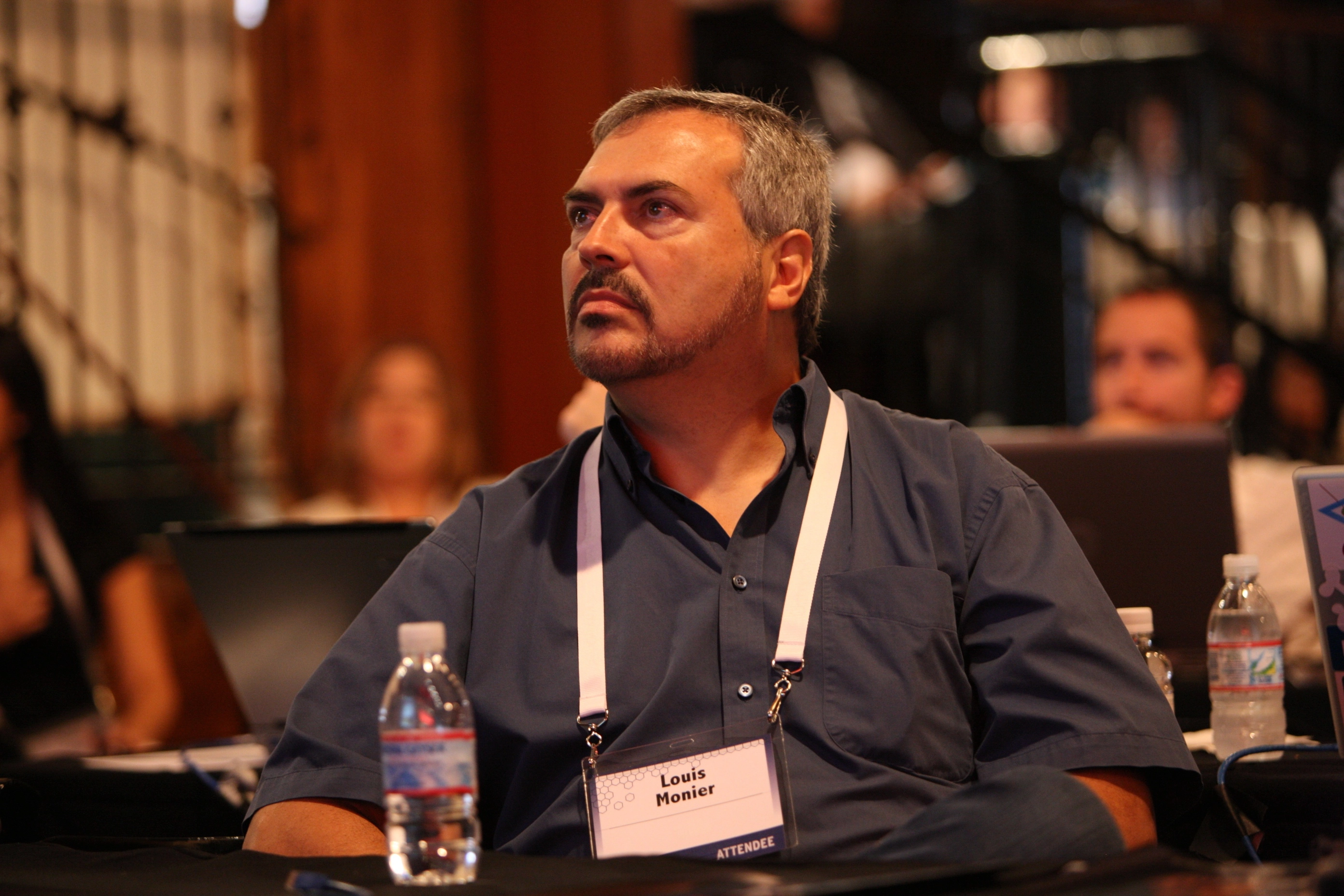
Flaherty returned to Palo Alto and pitched the idea to Louis Monier and Michael Burroughs. The mission was pure engineering masochism: build a crawler so robust and fast that it would force the Alpha hardware to sweat [02:18]. This was the "Hardware Paradox"—the greatest leap in software history was born not as a product, but as a heat-generator for high-end servers.
To house this experiment, the team cobbled together a cluster that, in 1995, sounded like science fiction: 20 Alpha systems, 130 GB of RAM, and 500 GB of disk space [02:51]. They named the crawler "Scooter." Internally, it was a scrappy side project known as "Turbo Vista" [03:07]. When Scooter was unleashed, the team braced for the systems to buckle under the strain.

Instead, the hardware held. Scooter didn’t break the machines; it devoured the web. In the process, it compiled a near-complete index of the internet, a feat no commercial system had ever touched [03:14]. DEC had accidentally built the most powerful search engine on Earth without a budget, a roadmap, or corporate permission [04:35].
The Cultural Explosion
On December 15, 1995, DEC quietly moved the project from the lab to a simple URL: altavista.digital.com [03:48]. There was no marketing blitz, no press releases, and no business plan. It was intended as a hardware demo—a way to show potential customers what Alpha chips could do under pressure.
The public had other ideas.
Within 24 hours, AltaVista was hit with 300,000 searches [04:03]. Word of mouth tore through Usenet and university mailing lists like wildfire. Before AltaVista, finding a specific page was a chore that took minutes; suddenly, it was instantaneous [04:20]. For the first generation of web users, AltaVista wasn't just a website; it was a new mode of interacting with human knowledge [04:27].
/
By The Numbers: The AltaVista Peak | |
Hardware Cluster | 20 Alpha 64-bit systems [02:51] |
System Memory | ~130 GB RAM [02:51] |
Storage Capacity | ~500 GB Disk [02:51] |
Launch Day Traffic | 300,000 searches in 24 hours [04:03] |
Late '90s Traffic | Tens of millions of queries per day [05:12] |
The Death of the Search Box
Despite its global dominance, AltaVista was an orphan within its own company. DEC was a hardware giant in decline, and in 1998, it was swallowed by Compaq in a $9.6 billion merger—the largest tech takeover to date [05:28]. AltaVista was a footnote in the deal; many Compaq executives didn't even know it existed until the papers were signed [05:45].
Compaq looked at the massive traffic and saw a missed opportunity—not for search, but for a "portal." In the late '90s, the Yahoo model reigned supreme: be the "one-stop entry point" for news, weather, and shopping [06:08]. In 1999, Compaq sold a majority stake to the investment firm CMGI, and the transformation began [06:30].
The clean, purpose-built search interface was sacrificed on the altar of the dot-com boom. The homepage filled with shopping links, e-commerce integrations, and news modules [06:58]. AltaVista was trying to be Yahoo and Amazon simultaneously, creating a cluttered "mosaic of priorities" that pushed the search box—the very thing users loved—further and further down the page [07:05].
The Great "What If": The $1 Million Google Offer
While AltaVista was busy adding weather widgets, a small startup in a Menlo Park garage was doing the opposite. In its infancy, Google quietly offered to sell itself to AltaVista for approximately $1 million [09:20].
The irony is staggering. AltaVista’s own engineers recognized the promise of Google's ranking model and supported the acquisition [09:28]. However, AltaVista had no dedicated budget for acquisitions and its owners viewed search as a secondary feature to the portal strategy. They walked away [09:35]. Instead of buying the future, they doubled down on the portal bet, preparing for an IPO that would never come [09:44].
Refining Inward vs. Expanding Outward
By 1999, the contrast between the two giants was a study in design philosophy. AltaVista looked like a cluttered business plan, dense with banners and partnership tiles [08:36]. Google, meanwhile, presented a stark white background and a single box [08:48].
Google looked like AltaVista did in 1995: fast, clean, and focused. While AltaVista expanded outward into every possible vertical, Google refined inward, perfecting speed and relevance [07:36]. Users noticed. The "speed of a search engine" had been replaced by the "weight of a portal" [08:42].
Folding into the Giant
The end of AltaVista was a slow-motion car crash of shifting ownership. When the dot-com bubble burst in April 2000, AltaVista’s IPO plans vanished, leaving it with the high overhead of a portal and no capital to sustain it [10:00].
In 2003, the search engine was sold to Overture, which was then almost immediately swallowed by Yahoo [10:24]. By 2004, the pioneering crawler and ranking system that had defined the web were gone, replaced by Yahoo’s own infrastructure [11:05]. The "Scooter" era was over; AltaVista was now just a skin for a competitor’s results [11:13].
The Legacy: A Vision Without a Home
The final blow came in July 2013, when Yahoo officially pulled the plug and redirected the URL to Yahoo Search [12:32].
Many of the architects of the search revolution moved on to the very company that replaced them; Michael Burroughs eventually joined Google [12:05]. Looking back, Louis Monier noted the fundamental difference: Google had the freedom to treat search as a "first-class priority," while AltaVista was always shackled by its corporate parents [12:14].
AltaVista didn't fail because the technology was lacking. It failed because the vision around it collapsed. It was the titan that forgot its own purpose, a reminder that in the world of tech, being first means nothing if you aren't willing to protect the very thing that made you great. It remains the ultimate cautionary tale of the "Hardware Paradox"—a software miracle that was eventually killed by the very corporate interests that accidentally created it.


Comments